
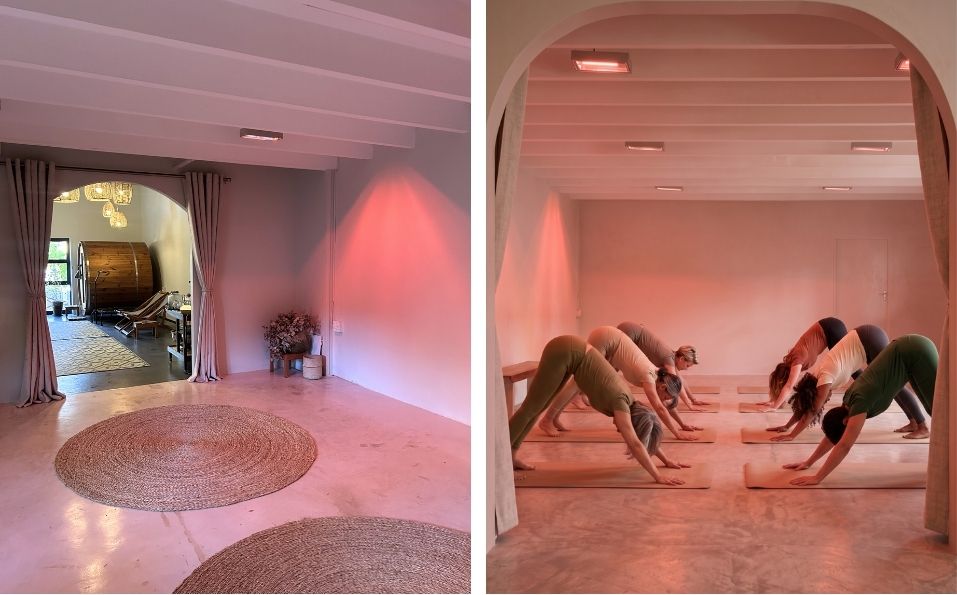
Mobility training has always been important for improving movement quality, flexibility, and long-term physical health. But performing mobility work in an infrared-heated environment may offer additional benefits supported by emerging research.
Unlike traditional heating systems, infrared heat warms the body directly rather than simply heating the air. Studies have shown that heat exposure increases circulation, delivering more oxygen and nutrients to muscles and connective tissue while reducing muscle stiffness.
Research also suggests that warmer muscles and tendons become more pliable, which can improve range of motion and make stretching and mobility exercises more effective. For many people, this creates an environment where movement feels easier, more comfortable, and more restorative.
Beyond physical benefits, heat exposure has been associated with relaxation and activation of the body's parasympathetic nervous system, the state responsible for rest and recovery. This makes infrared mobility classes an opportunity to support both movement and overall wellbeing.
Here's what happens inside your body:
• Improved circulation: Infrared heat encourages healthy blood flow, helping deliver oxygen and nutrients to your muscles.
• Greater flexibility: Warm muscles and connective tissues become more pliable, allowing for a deeper range of motion and more comfortable movement.
• Gentle, natural sweating: The warmth encourages sweating as your body regulates its temperature, leaving you feeling refreshed after class.
• Supports recovery: The combination of movement and heat may help reduce muscle stiffness and promote post-workout recovery.
• Calm mind & relaxed body: Heat can promote relaxation, helping reduce stress and leaving you feeling grounded and centred.
This isn't just about getting hot, it's about moving with intention, creating space in your body, and supporting your overall wellbeing.
Adding Sauna and Cold Plunge
Combining an infrared mobility class with a sauna and cold plunge introduces the principles of contrast therapy.
Sauna use has been linked to improved circulation, muscle relaxation, and post-exercise recovery, while cold-water immersion has been shown to reduce muscle soreness and support recovery after physical activity. Together, these practices create a holistic approach to movement, recovery, and nervous system regulation.
While no single intervention is a miracle solution, research suggests that combining movement, heat, and cold exposure can support flexibility, recovery, circulation, and overall well-being when practised consistently and appropriately.
References
Laukkanen, J. A., et al. (2018). Sauna bathing and systemic inflammation. American Journal of Medicine.
Beever, R. (2009). Far-infrared saunas for treatment of cardiovascular risk factors. Canadian Family Physician.
Peake, J. M., et al. (2017). Recovery after exercise: Cold water immersion and other strategies. Sports Medicine.
Wilke, J., et al. (2020). The effects of stretching on range of motion and performance. International Journal of Sports Physical Therapy.
Hussain, J., & Cohen, M. (2018). Clinical effects of regular dry sauna bathing: A systematic review. Evidence-Based Complementary and Alternative Medicine.